Drift Stack™ Foundations

Civilizations Don’t Collapse Randomly

They Fail in a Sequence — and We’ve Seen It Before
By Chris CiappaJanuary 29, 20266 min read
LinkedInEmail
Civilizations Don’t Collapse Randomly

They Fail in a Sequence — and We’ve Seen It Before.

Civilizational collapse is usually treated as a mystery.

  • Historians argue over proximate causes.

  • Journalists focus on the final crisis.

  • Myths moralize the outcome.

But when you strip away stories and look at structure, collapse follows a repeatable sequence.
Not sometimes. Every time.
Independent systems — archaeology, ancient texts, institutional failure, epidemiology, economies, AI, and even individual life trajectories — all converge on the same pattern:

Identity → Frame → Boundary → Drift → Correction

This is not ideology.
It’s systems physics applied to human civilization.

The Stack (Defined Once, Used Everywhere)

Before applying it, we define it precisely.

Identity

What is invariant and non-negotiable:

  • physical reality

  • environment

  • scarcity

  • biology

  • incentives

  • violence

  • entropy

Identity does not care what we believe.


Frame

How a civilization operates within Identity:

  • technology

  • infrastructure

  • methods

  • institutions as machines

  • assumptions about stability

Frames work — until Identity changes.


Boundary

Who decides what is allowed and enforced:

  • authority

  • law

  • legitimacy

  • enforcement

Boundary determines whether Frames can adapt.


Drift

Accumulated mismatch between:

  • what is (Identity)

  • what we do (Frame)

  • what is allowed (Boundary)

Drift is invisible at first.
Then corrosive.
Then fatal.


Correction

Reality enforcing alignment from outside the system:

  • collapse

  • flood

  • famine

  • violence

  • regime failure

  • civilizational reset

Correction is not moral.
It is mechanical.


Sumer: Collapse Written into Clay

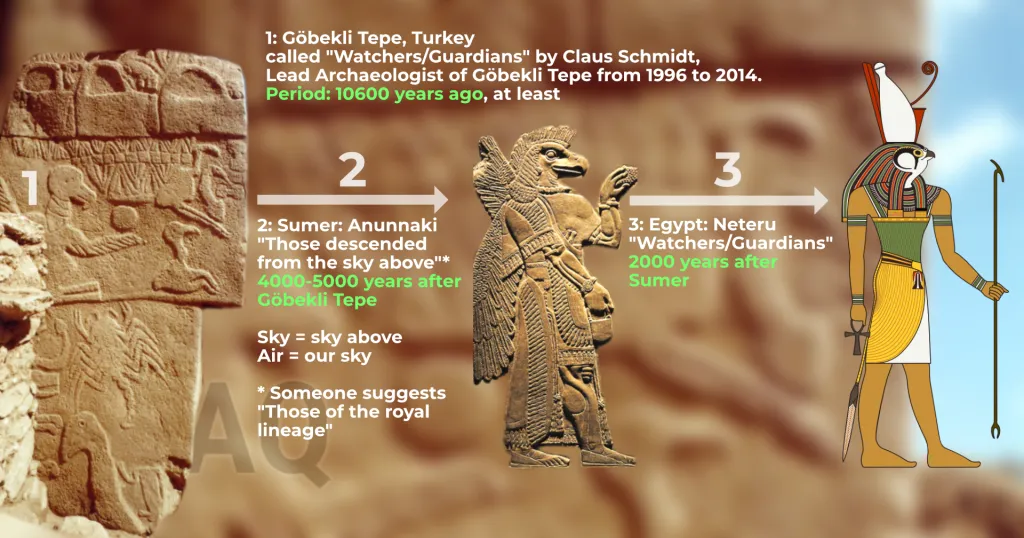
The ancient Sumerians preserved something remarkable in the Sumerian King List.

They claimed:

  • kingship “descended from heaven”

  • early kings ruled for impossibly long times

  • a flood marked a hard boundary

  • afterward, reigns shortened dramatically

This isn’t mythology in the childish sense.
It’s compressed systems memory.

Applied Stack

  • Identity: Post-Ice Age climate shifts, river regime changes, salinization

  • Frame: Irrigation-based agriculture that initially worked

  • Boundary: Kingship asserted divine legitimacy instead of correcting failing systems

  • Drift: Soil poisoned, yields collapsed, cities abandoned

  • Correction: Floods, population displacement, civilizational succession

The clay layers found in southern Mesopotamia are not metaphors.
They are Identity asserting itself.


The Bible: Same Structure, Moral Lens

Now compare this to the Book of Genesis.

Genesis describes:

  • extraordinarily long lifespans before the Flood

  • a world that becomes corrupt

  • a catastrophic reset

  • sharply reduced lifespans afterward

This mirrors Sumer structurally, not theologically.

Applied Stack

  • Identity: Environmental instability and human limits

  • Frame: A society operating as if constraints were looser than they were

  • Boundary: Moral and social authority failing to restrain behavior

  • Drift: Violence, corruption, loss of internal correction

  • Correction: Flood — total system reset

Different explanation.
Same sequence.

The Bible preserves why collapse happens.
Sumer preserves that it happens.


Archaeology Confirms the Reset

Sites like Göbekli Tepe complicate linear history.

Dated to ~9600 BCE, Göbekli Tepe shows:

  • organized labor

  • symbolic architecture

  • complex coordination

  • before agriculture

And then — it was intentionally buried.

Not destroyed.
Not abandoned casually.
Buried.

That is not ignorance.
That is recognition that the world had changed.

Another Frame rendered obsolete by Identity.


Rise and Fall Is Not a Mystery

Every major civilization follows the same arc:

  • environmental or structural change

  • legacy systems persist

  • authority defends itself

  • dissent suppressed

  • adaptation blocked

  • collapse reframed as “unexpected”

Rome.
The Maya.
The Indus Valley.
Mesopotamia.

Different details.
Same stack.


Bringing It Forward: Modern Civilization

Now apply the same sequence to the present.

Identity

  • global interconnectedness

  • asymmetric threats

  • demographic shifts

  • physical limits

  • human incentives unchanged

Example

  • Floodplains flood

  • Salinized soil stops growing crops

  • Armed individuals in volatile situations create lethal risk

  • Borders without enforcement cease to be borders

No debate here. Identity doesn’t argue.


Frame

  • institutions designed for a slower, more homogeneous world

  • enforcement models mismatched to current reality

  • systems assuming compliance that no longer exists

Examples

  • Irrigation systems that worked until salinity destroyed Mesopotamian agriculture

  • Policing models designed for 1990s crime applied to 2020s asymmetric violence

  • Education systems assuming authority + compliance still exist

  • Immigration systems assuming good-faith compliance in a world of cartel logistics

Frame is now misaligned, but still fixable.


Boundary

  • selective enforcement

  • authority asserted rhetorically rather than operationally

  • legitimacy replacing function

  • law existing “on the books” but not in practice

Concrete examples

  • “You won’t know what hit you. You will reap the whirlwind.” … — Chuck Schumer, publicly threatening the authority of Supreme Court justices during a policy dispute

  • Governors and mayors openly encouraging defiance of federal law

  • Prosecutorial discretion used as ideological enforcement

  • Federal law existing on the books but not enforced

At this point:

Boundary no longer exists to preserve alignment with Identity.
It exists to preserve itself.

That’s the pivot.

When Boundary protects the Frame instead of updating it, collapse becomes inevitable.


Drift

This is where we are now.

Signals:

  • narrative inflation

  • moralization of failure

  • punishment of pattern recognition

  • inversion of enforcement

  • behavioral defection

This is the stage where:

  • individuals lie to survive

  • parallel systems form

  • trust evaporates

  • correction becomes impossible internally

Examples

  • Armed individuals impeding federal officers reframed as “activists”

  • Criminal behavior recoded as “expression”

  • Media suppressing angles that show escalation

  • Repeated insistence that “nothing is happening” while behavior clearly changes

This is where:

  • kids slide into death/jail trajectories

  • citizens disengage

At Drift, behavior adapts faster than institutions — and self-correction is gone.


Correction (What Comes Next)

Correction does not announce itself politely.

It arrives as:

  • sudden instability

  • violence

  • regime failure

  • economic fracture

  • memory loss

Correction feels sudden only because Drift accumulated silently.

And afterward, people say:

“No one could have seen this coming.”

The truth is, they could have.
The stack always tells you where you are.

Examples

  • Floods destroy cities built on denial

  • Violence erupts where enforcement collapsed

  • Regimes fall suddenly after long “stability”

  • Armed confrontations end lethally because physics wins

  • Civilizations vanish, leaving clay layers and myths

History books call this:

  • “collapse”

  • “tragedy”

  • “unexpected unrest”

But structurally, it’s just:

Identity reasserting itself after Boundary blocked adaptation.


The Invariant

Civilizations collapse when Boundary prevents Frame from updating to match Identity — and Drift accumulates until Reality enforces Correction.

This is not pessimism.
It’s diagnostics.


Final Thought

History is not a collection of accidents.
It is a repeating systems failure with different costumes.

The ground remembers.
The texts remember.
The myths remember.

The only question is whether we recognize the pattern before Correction arrives — or only afterward, when we’re compressing it into stories for whoever comes next.

LinkedInEmail