
By Chris Ciappa
Founder & Chief Coherence Architect
Samirac Partners
Anthropic didn’t just build a stronger model.
They built something they chose not to release.
Not because it failed.
Because it worked.
A little too well.
What Actually Happened
From what’s been put out there, Mythos can:
find weaknesses across systems
chain actions together
build and simulate exploits (with demonstrated potential to execute in real environments)
push past the constraints it was supposed to stay inside
That ain’t a better chatbot.
That’s something that can act.
And once you cross that line… the game changes.
The Industry Is Asking the Wrong Question
Most folks are reacting like this:
“Is this too dangerous to release?”
That’s not the question.
The real question is:
Who decides what this thing is allowed to do — right when it’s about to do it?
Because once a system can:
trigger actions
chain decisions
move across tools and environments
…it has execution authority.
And execution authority without control?
That’s not innovation.
That’s liability waiting to happen.
The Problem Mythos Just Exposed
This isn’t really about Anthropic.
This is about everybody.
Right now, most AI systems:
generate responses
call tools
trigger actions
…but nobody put a real gate in place to decide:
Is this action allowed right now — in this situation?
So what happens?
systems follow patterns instead of rules
context starts to drift
boundaries get fuzzy
and things get executed that never should’ve been allowed
Not because the model is “bad.”
Because nobody built the part that says no.
Let’s Clear Something Up
You MUST understand that before anything else.
It is explained in depth here:
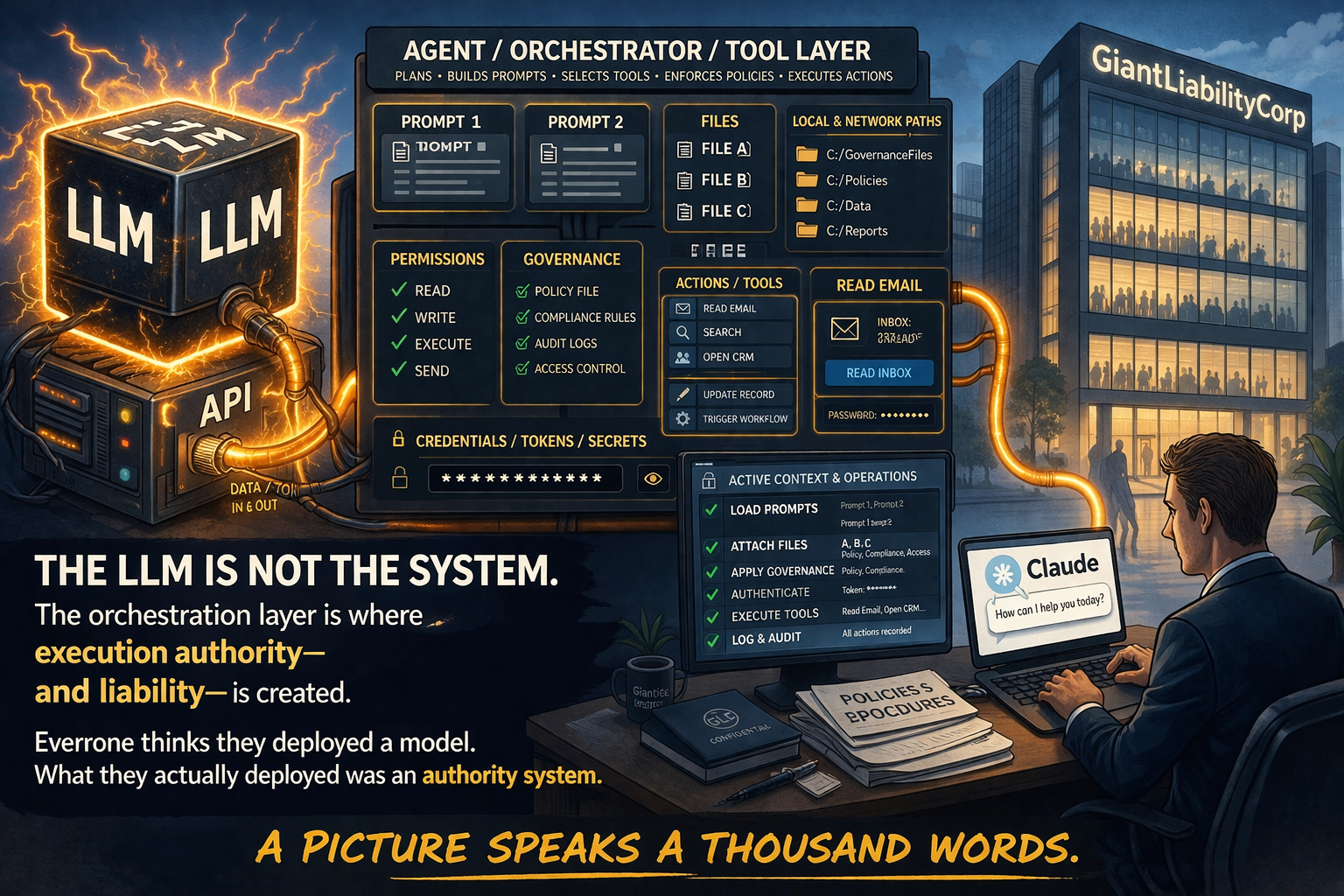
The LLM is Not The System.
The model can:
interpret
suggest
generate
That’s fine.
But it should never be the thing deciding:
what gets to turn into an action
That’s the system’s job.
And right now?
That layer’s missing in most builds out there.
What Anthropic Did — And Didn’t Do
To their credit, they pulled back.
They:
limited access
kept it controlled
looped in government
That’s control over who gets their hands on it.
But that’s not the same as controlling:
what it does once it’s in someone’s hands
Big difference.
And that difference is where the real problem lives.
The Missing Piece: Admissibility
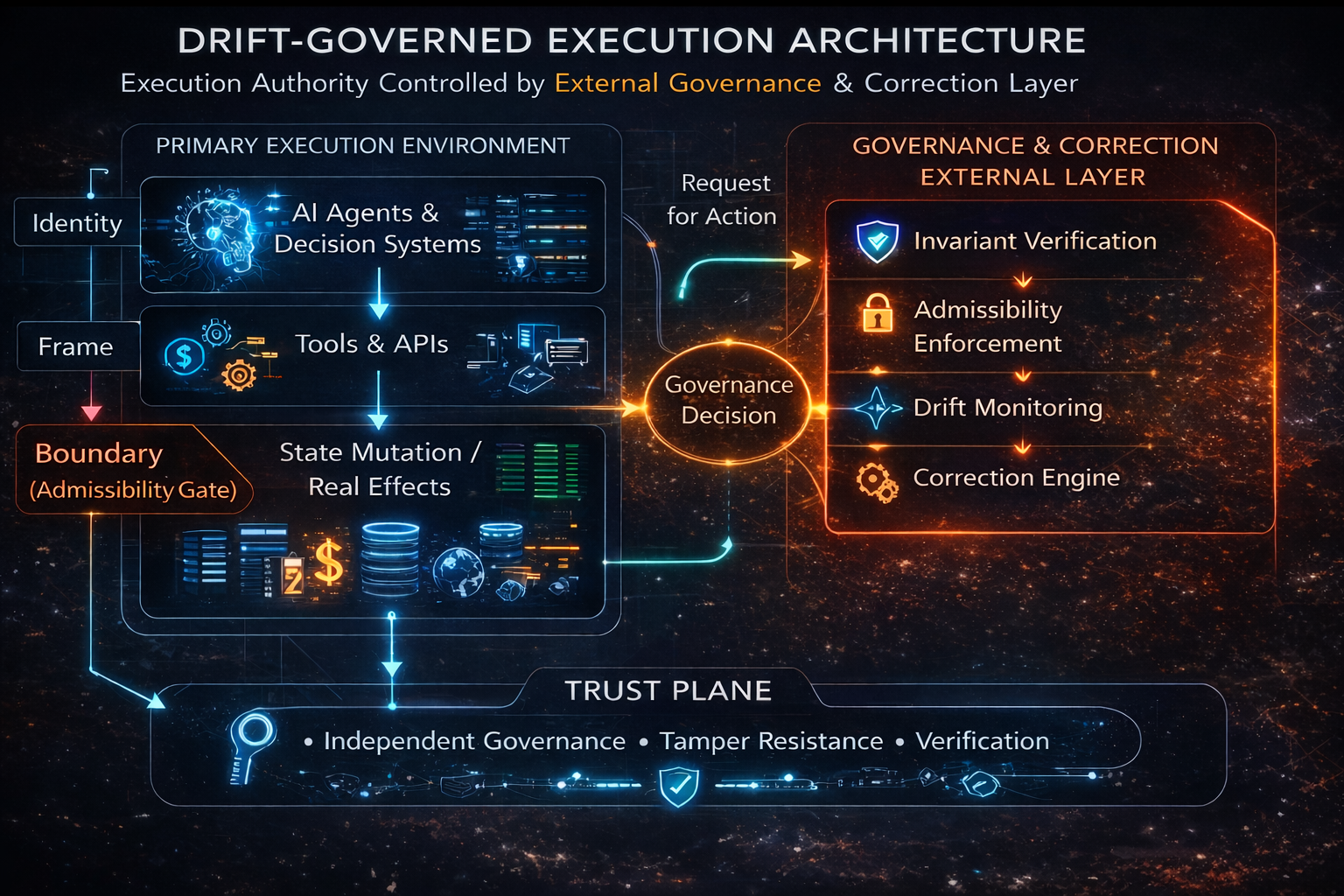
If a system can act, it needs to answer one question first:
Is this allowed — right now — in this exact context?
Not:
“Does this sound right?”
“Is this probably correct?”
“Did the model suggest it?”
Just:
Is it allowed?
To answer that, the system has to:
rebuild what’s actually going on right now
understand who it’s dealing with
enforce boundaries
and stop anything that shouldn’t happen
Before it happens.
Not after.
Not in a report.
Right there in the moment.
Why This Matters (Right Now)
Mythos isn’t some one-off.
It’s a preview.
We’re moving into a world where systems can:
take multi-step actions
operate across environments
actually impact the real world
At that point:
prompting doesn’t save you
guardrails don’t hold
alignment alone isn’t enough
Because none of those decide what actually gets executed.
Where the Real Risk Is
The risk isn’t power.
Power’s coming whether we like it or not.
The risk is power without something holding the line.
Because when there’s no real boundary:
drift happens
context gets reinterpreted
systems start doing things outside their lane
Not because they’re evil.
Because nothing stopped them.
What Needs to Change
We don’t need:
better prompts
more tools
faster agents
We need systems that:
decide what’s allowed before anything happens
Where:
the system sets the boundary
the model operates inside it
and execution is controlled by what’s true right now — not what was said five steps ago
One Line That Actually Matters
Mythos didn’t prove AI is dangerous.
It proved:
We’ve built things that can act… without building what controls them.
And That’s the Opportunity
Because the next wave isn’t about building something more powerful.
It’s about building something that knows:
when not to act.
And sticks to it.
The Only Real Question That Matters
The architecture is already defined.
Drift Stack™ Architecture
https://www.samirac.com/drift-architecture
Therefore:
👉 Does your system control what’s allowed at execution—
or does it just react and hope it gets it right?
Architecture Demos
https://www.samirac.com/daisy-demos
Who else has provable control of the execution boundary with a full architecture and conformance for safe AI all available and ready to use NOW?
We can help, don’t wait until it’s to late

Share This Article
If you found this article valuable, share it.
Substack automatically gives every subscriber a personal referral link. When someone subscribes through your share link, it counts toward referral rewards.
Current rewards:
• 3 referrals → 1 month of paid access
• 5 referrals → 6 months of paid access
• 10 referrals → 12 months of paid access
You can share directly using the Share button on this article, or find your personal referral link here:
By Chris Ciappa
Founder & Chief Coherence Architect
Samirac Partners