Reality is a directory.
A model is a ZIP file.
When you build a model, you are doing three things at once:
Compressing information
Discarding edge cases
Replacing causal structure with statistical structure
That is not a flaw.
That is what modeling is.
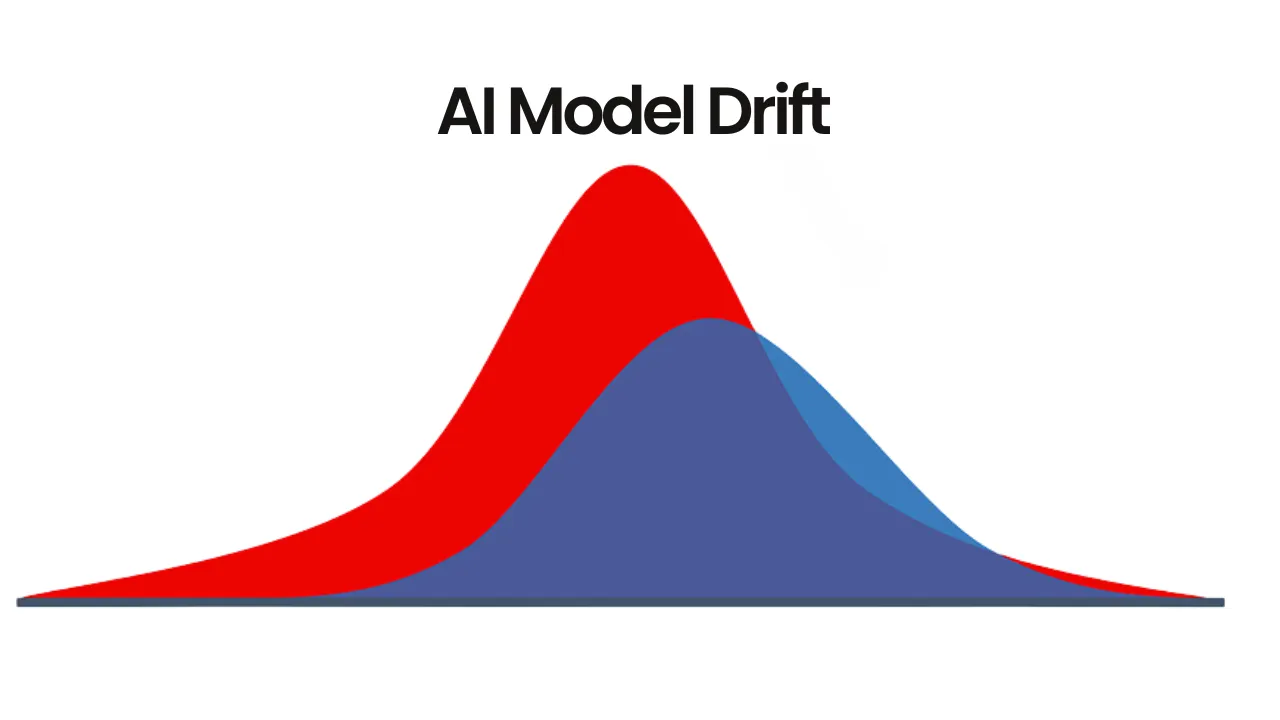
Drift is not a bug.
Drift is the accumulated consequence of compression under optimization.
For those who think in symbols and science:
Entropy is the reason. What we call “drift” is simply the tendency of systems to lose accessible, structured information over time unless energy is actively applied to preserve it.
Why “Zero Drift” Is Impossible
(No ideology. Just mechanics and proven science.)
1. Compression is lossy by definition
If a model were:
complete
lossless
perfectly faithful
…it would be the world itself.
The moment you abstract, generalize, or reduce dimensionality, information is lost.
No amount of cleverness fixes that.
2. Optimization always exploits proxies
Models do not optimize truth.
They optimize:
loss functions
rewards
metrics
likelihoods
Even if the proxy is very good, it is never identical to reality.
So the model learns:
“What scores well”
instead of
“What is invariantly correct.”
That gap is drift. That gap can cause hallucinations, and far worse.
3. Iteration compounds loss
Every update is effectively:
Reality → ZIP → Unzip → Re-ZIP
Each cycle:
reinforces internal structure
erodes rare constraints
increases confidence
reduces epistemic humility
This happens even if the data never changes.
So What Would “No Drift” Actually Mean?
When someone says:
“We built a model with no drift”
What they really mean is one of the following—and all are red flags:
We stopped updating it
→ frozen drift, not eliminated driftWe only test on familiar cases
→ drift hidden, not preventedWe defined success narrowly
→ drift renamedWe outsourced correction to humans downstream
→ drift deferred, not solved
The Only Thing That Actually Works: Bounded Drift
The correct goal is not zero drift.
The correct goal is:
Drift that is detectable, constrained, and externally correctable.
That requires architecture—not optimism.
What a “Low-Drift” System Actually Needs
Using stack language, cleanly:
1. Explicit invariants
(Files you never compress)
These are constraints the model is not allowed to optimize away:
physical constraints
legal constraints
safety boundaries
authority limits
They must be:
external
enforced
non-negotiable
2. Separation of learning and authority
A model may:
observe
predict
suggest
But it may not:
execute
enforce
deny
trigger irreversible actions
without a separate gate.
This is where most systems fail.
3. Out-of-band correction
Correction must come from outside the ZIP.
Not:
self-evaluation
self-training
self-justification
But:
independent audits
adversarial testing
hard stops
human authority with real power
4. Drift visibility
A safe system:
exposes uncertainty
flags low-confidence zones
surfaces disagreement
does not smooth everything into confidence
Confidence inflation is drift in disguise.
Correction after the fact isn’t safety.
It’s damage control.
AI hallucinations.
Governance failures.
Strategy drift.
Different symptoms — the same architectural failure.
Over the past year, I’ve mapped a repeatable failure pattern across AI systems, institutions, markets, and organizations. I formalized it as the Drift Stack™ — a diagnostic that identifies which layer is failing and why coherence is lost as systems scale.
For organizations deploying AI systems that can take action — deny, trigger, flag, enforce, decide — the critical question is not performance.
It’s whether that authority is safe to delegate before it becomes a hidden liability.
Drift Architecture Diagnostic — $250
A focused 30-minute architectural review to determine whether risk is accumulating in:
• Identity
• Frame
• Boundary
• Drift
• External Correction
If there’s a deeper structural issue, it becomes visible quickly — while correction is still cheap.
If not, you leave with clarity and confidence in what you’re scaling and defending.
👉 Drift Assessment Info: https://www.samirac.com/drift-assessment
👉 Full work index: https://www.samirac.com/start-reading
—
Chris Ciappa
Founder & Chief Architect, Samirac Partners LLC
Drift Stack™ · SAQ™ · dAIsy™ · Mind-Mesh™