Guided Reading Track · Database-Driven
Educational Track
A guided entry path into drift, institutional coherence, civic formation, educational drift, and the structural patterns that shape systems over time.
Follow the sections in order for the guided path, or move to the full Reading Spine to browse the complete 137-article corpus by subject.
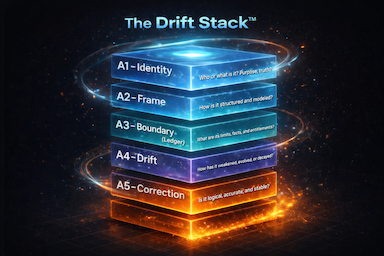
Structure first. Authority before execution.
What This Track Is
A guided entry path into drift, institutional coherence, civic formation, educational drift, and the structural patterns that shape systems over time.
5 ordered sections · 15 article placements. The page structure and article order are loaded from the Samirac database.
Phase I — Pattern Recognition
Begin here. These articles establish that collapse is not random, that thought can be displaced, and that people often defend frames rather than evaluate truth.
- Civilizations Don’t Collapse RandomlyThey Fail in a Sequence — and We’ve Seen It BeforeOpening frame: civilizational collapse follows recurring patterns rather than isolated accidents.6 min read
- The Death of Independent ThoughtWhen identity is tied to tribal beliefs, truth doesn’t stand a chance.Explores the erosion of independent evaluation and the replacement of reasoning with alignment pressure.6 min read
- Why People Defend Broken Frames Instead of Updating ThemHow identity, environment, and narrative turn simple frame correction into threatShows why people protect failing interpretive structures even when the evidence turns against them.8 min read
Phase II — Naming the Drift
Once the pattern is visible, the next step is to name it. These pieces move from recognition into diagnosis and show how drift propagates through identity, institutions, media, law, and social meaning.
- What Is Drift?The simple 5 letter word that can make or break entire industries and societies.Introduces the foundational mechanism itself: accumulated deviation without sufficient correction.4 min read
- Drift, Not Divorce: Measuring America’s Drift Against Its Own AnchorsA recent question circulating in conservative media asked whether Americans still have anything in common across our political divide.Reframes social fracture as systemic drift rather than simple separation or disagreement.6 min read
- America’s Drift Engine: How 30 Years of Ideological Capture Broke Education, Corporations, and Now AIThe pattern nobody wants to seeMaps the long-horizon structural process that rewired identity, frame, and downstream interpretation.5 min read
- How America’s Educational Drift Began: The Quiet Capture of the Teacher PipelineTracks one of the key upstream channels through which drift became normalized and reproduced.8 min read
- Media Drift: How Upstream Ideology Rewired Journalism and Led to Enforcement CultureExamines how the narrative layer drifted and began reinforcing distortion instead of correction.6 min read
- From Equal Justice to Social Justice: Bill Ayers, Teacher Formation, and the Architecture of Educational DriftThe shift from constitutional anchors to interpretive frameworks—and how it changed the classroomShows how legal and moral framing can be redefined through linguistic and ideological drift.8 min read
Phase III — Mechanism and Architecture
These articles move beneath symptoms and into mechanism. This is where drift is no longer just observed — it becomes structural, directional, and increasingly measurable.
- The Ideology of DriftWhy Modern Experts Collapse When Confronted With ArchitectureExamines drift not merely as outcome, but as a worldview that protects and propagates instability.7 min read
- ENGINEERED DRIFTThe human face of educational drift, institutional drift, and ideological drift colliding.Introduces the possibility that some drift is not accidental, but reinforced by incentives and design choices.2 min read
- The Drift Stack Behind the Adolescent Mental Health CrisisIt was never “the platforms.” It was the architecture.Applies layered drift logic to developmental formation and how unstable frames propagate downward.6 min read
Phase IV — Cognitive Asymmetry
Not everyone sees the same structure at the same depth. This article helps explain why some people recognize system-level pattern earlier than others — and why that often creates friction rather than recognition.
- The AI-Divergent Thinker — Why the Next Innovation Wave Won’t Come From Big Teams, But From Cross-Disciplinary MindsExplores the cognitive layer: why certain minds detect structure, divergence, and incoherence earlier than the surrounding environment.5 min read
Phase V — Institutional and Civic Application
These pieces show that drift is not just philosophical or cultural. It manifests in live domains where authority, policy, and public trust depend on structural coherence.
- The Legal Profession Abandoned Its AnchorA Structural Proof — Not an Ideological ArgumentA domain-specific application showing what happens when a profession stops protecting its own governing frame.7 min read
- The Civic Curriculum Integrity Index: Measuring Institutional Drift in EducationUsing invariant anchors to measure institutional alignment with civic education foundations.Moves toward evaluation: not just noticing drift, but scoring and measuring its educational expression.2 min read