Guided Reading Track · Database-Driven
Readiness Track
A guided reading path through AI readiness, lifecycle maturity, opportunity selection, deployment sequencing, and responsible AI adoption.
Follow the sections in order for the guided path, or move to the full Reading Spine to browse the complete 137-article corpus by subject.
Structure first. Authority before execution.
What This Track Is
A guided reading path through AI readiness, lifecycle maturity, opportunity selection, deployment sequencing, and responsible AI adoption.
5 ordered sections · 18 article placements. The page structure and article order are loaded from the Samirac database.
The Complete AI Journey™
This section introduces the full adoption path: understanding where the organization is, determining what should happen next, and maintaining control as AI becomes operational.
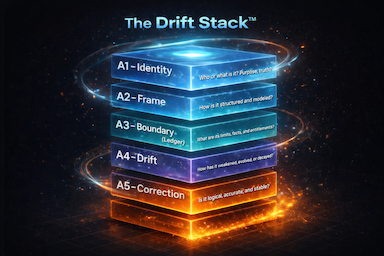
- The Complete AI JourneyA continuous Framework for SuccessIntroduces the connected operating model for lifecycle maturity, runtime governance, and Drift Stack™ control.5 min read
- AI Lifecycle Maturity Model™Understanding Organizational Readiness for Artificial IntelligenceExplains how organizations mature from exploration and pilots into durable, governed AI operations.47 min read
- The Question Nobody Wants To Ask About AIWhy the future may belong to structural thinkers rather than narrative thinkers and larger teamsShows why readiness depends on structural thinking, not merely narrative, enthusiasm, or larger teams.6 min read
Readiness Before Deployment
Most AI failures begin before the system goes live. This section focuses on maturity, organizational fit, opportunity selection, governance posture, and deployment readiness.
- Architecture Is What Saves YouWhat Large-Scale Systems Eventually Teach EveryoneExplains why architecture, not tool enthusiasm, is what protects organizations as AI systems become operational.5 min read
- The LLM Is Not the SystemWhy Real AI Requires Architecture Above and Around the ModelSeparates the model from the full operating system around it: data, workflow, authority, tools, and execution.7 min read
- The No-Code Delusion and the Coming AI WreckageWhy Tool-Driven AI Is Recreating the Dot-Com Bust — With Execution AuthorityWarns against confusing fast assembly with durable system architecture.6 min read
- A Hard Truth About “Agentic AI” That Keeps Getting DodgedThe moment you decide you will allow an agent or system to read, modify, create, or execute, you have granted authority and you have liability.Explains why agentic capability without architecture, authority boundaries, and correction creates avoidable risk.3 min read
Opportunity Selection & Business Prioritization
AI readiness is not just technical. Organizations need to decide which use cases belong now, which should wait, and which require stronger governance before implementation.
- Who Remains In The Wake of AI ?Reading the Signal Beneath the NoiseShows why AI adoption changes the value of human roles, structural thinking, and organizational capability.10 min read
- This Barely Qualifies as AIWhy bounded orchestration environments are being mistaken for autonomous intelligence — and where the real architectural difficulty actually lives.Distinguishes bounded orchestration from real autonomy so leaders do not overestimate what has actually been deployed.2 min read
- Healthcare Fraud Detection Necessitates Architecture — Not Just DetectionHow anomaly detection can mistakenly accuse innocent providers — and why fraud detection systems need architectural safeguards.Shows why high-consequence use cases require architecture before detection, dashboards, or automation are trusted.4 min read
From Pilot to Production
This section focuses on the shift from impressive AI demonstrations into systems that operate with real data, real users, real authority, and real consequences.
- The Architecture Everyone Missed — And Why AI Agents Are Collapsing in 2026The new 2026 State of AI Agents Report just dropped, and the industry is celebrating like it’s a roadmap. It’s not. But it surely points to some interesting findings.Explains why agentic systems fail when architecture, authority, and correction are treated as afterthoughts.7 min read
- DeepSeek didn’t discover anything. They hit the wall architects have been warning about for months.Scale without invariants destabilizes systems.Shows why model gains eventually run into architectural constraints.4 min read
- Architecture vs. Compute — How the Drift Stack Solves AI’s Energy CrisisThe cheapest watt-hour is the one the architecture never lets the system burn.Connects architectural discipline to wasted computation, retries, correction costs, and energy demand.6 min read
- The Most Expensive Computation Is the One That Should Never Have HappenedThe overlooked relationship between drift, recomputation, and AI energy demandFrames bad execution as an avoidable cost when systems act before they should.5 min read
Governance Readiness
Before AI can scale responsibly, organizations need more than policies. They need authority structures, decision rights, execution boundaries, evidence, and correction mechanisms.
- Most AI Governance Is Still ObservationalShows why observing, auditing, and explaining after execution is not enough.4 min read
- AI Governance Fails Because It Starts One Layer Too LateIf your AI governance strategy starts at accountability, you’re already too late.Explains why governance fails when it begins at policy, review, or accountability instead of architecture.4 min read
- Governance Does Not Control Runtime ExecutionArchitecture and Code are the enforcementShows why governance must eventually connect to runtime authority and enforceable system behavior.5 min read
- Execution Authority as the Missing Control Surface in AI GovernanceWhy Execution Authority—Not Model Alignment—Is the True Governance BoundaryDefines the control surface required once AI systems are capable of real-world action.19 min read